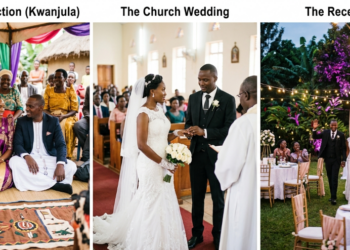

For years, wedding style conversations have revolved around the bride, but today’s groom is just as much a visual centrepiece. From the Kwanjula to the church ceremony and reception, a groom’s look should feel intentional, polished, and reflective of his personality.
Yet, many grooms get it wrong, not because they do not care, but because small details are overlooked. And in weddings, it is often the small details that make or break the entire look. Here are seven common groom style mistakes that can quietly ruin an otherwise perfect appearance and how to avoid them.
1. Wearing an ill-fitting suit
Nothing undermines a groom’s look faster than a poorly fitting suit. Whether it is too tight, too baggy, or simply not tailored properly, an ill-fitting outfit immediately looks unpolished.
In Uganda, many grooms rent suits or rush tailoring close to the wedding date. The result is often sleeves that are too long, trousers that bunch at the ankles, or jackets that pull awkwardly at the buttons.
A well-fitted suit should sit comfortably on your shoulders, taper cleanly at the waist, and allow ease of movement. Even a modest suit can look expensive when it fits perfectly, while an expensive one can look cheap if it does not.
2. Ignoring the dress code or theme
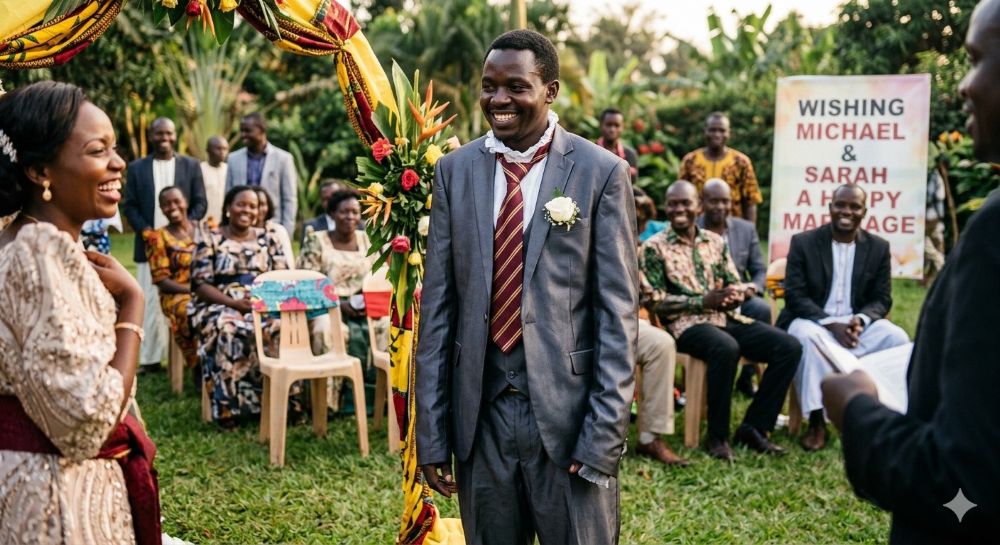
Your outfit should complement the overall wedding aesthetic. Showing up in a black tuxedo when the theme is garden elegance, or wearing overly casual attire at a formal event, creates visual inconsistency.
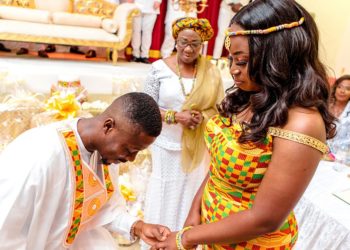
This is especially important in Ugandan weddings where colour coordination plays a big role, particularly during the Kwanjula. The groom’s outfit should align with the bride’s attire and the chosen colour palette.
Coordination does not mean matching exactly, but it does mean blending seamlessly into the overall look.
3. Overdoing accessories
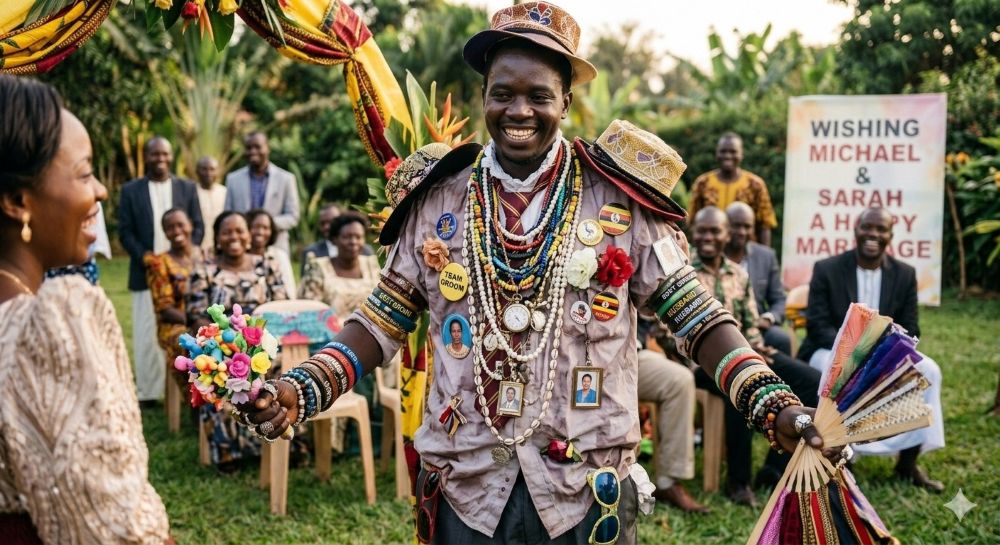
Accessories can elevate a look, but too many can overwhelm it. Pocket squares, lapel pins, watches, bracelets, chains, and flashy shoes all competing for attention can make the groom look cluttered rather than stylish.
A common mistake is trying to “stand out” by adding multiple statement pieces. Instead, choose one or two elements to highlight, perhaps a classic watch or a well-folded pocket square and keep the rest minimal.
Elegance often comes from restraint.
4. Poor grooming and personal care
Even the best suit cannot compensate for poor grooming. Unkempt hair, dry skin, or an untrimmed beard can take away from an otherwise polished appearance.
Grooms should invest time in grooming just as much as brides do. This includes:
•A fresh haircut a few days before the wedding
•Beard trimming or shaving
•Skincare to ensure a clean, healthy look
In Kampala’s heat, it is also important to consider sweat control and long-lasting grooming products to stay fresh throughout the day.
5. Wearing the wrong shoes
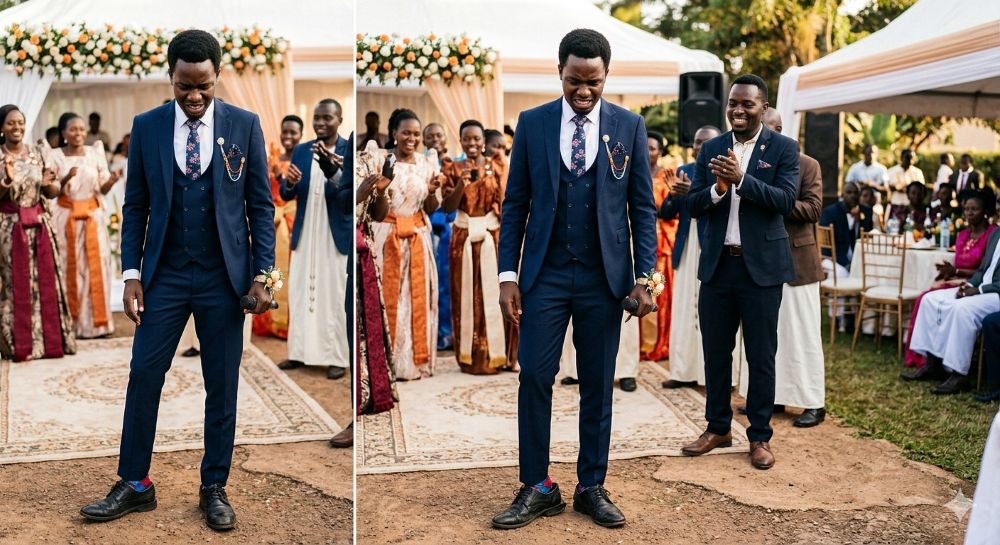
Shoes are often overlooked, yet they complete the entire outfit. Scuffed, mismatched, or overly casual shoes can disrupt an otherwise well-coordinated look.
For formal weddings, classic leather shoes in black or brown are usually the safest choice. Sneakers or overly trendy footwear may work for specific themes, but only when intentionally styled.
Equally important is comfort. A groom who is constantly adjusting or limping due to uncomfortable shoes will struggle to carry himself confidently.
6. Forgetting about fabric and weather
Uganda’s climate matters. Heavy fabrics that trap heat can leave a groom looking uncomfortable and sweaty before the ceremony even begins.
Lightweight, breathable materials are essential, especially for outdoor weddings or daytime events. Linen blends, lightweight wool, or breathable cotton options can help maintain both comfort and style.
Ignoring the weather not only affects how you look, it affects how you feel, and that confidence shows.
7. Leaving everything to the last minute
Perhaps the most common mistake is poor planning. Waiting until the last week to sort out outfits, fittings, and accessories often leads to rushed decisions and avoidable errors.
Last-minute tailoring rarely delivers perfect results, and rented outfits may not fit as expected without adjustments.
Planning allows time for fittings, alterations, and coordination with the bride’s look and overall theme. It also reduces stress, allowing the groom to focus on enjoying the day.
Final thought
A groom’s style is not about being flashy; it is about being intentional. When the fit is right, the details are considered, and the look aligns with the overall wedding aesthetic, confidence naturally follows.
In Ugandan weddings, where culture, colour, and presentation matter deeply, a well-dressed groom enhances not just his own presence, but the entire celebration.
Because at the end of the day, style is not just about what you wear; it is about how you carry yourself in one of the most important moments of your life.